







Acetal (POM)·Engineering Precision and Reliability
Acetal (POM) Injection Molding
Acetal, also called POM or polyoxymethylene, is a highly crystalline plastic built for precision. It’s strong, stiff, and slippery, holds tight dimensions, and shrugs off fatigue, solvents, and moisture. When a part has to move, slide, or snap thousands of times without wearing out, acetal is usually the answer.
48-Hour
Quotes
No MOQ
No Minimum Order Quantities
One
Team, Material to Production

Material grades
Common Brand Names
Most engineers know acetal by one of these names. Delrin® is a homopolymer, while the others are mostly copolymers, and each comes in unfilled, glass-filled, low-wear, and food-contact grades. If you’re not sure which one to call out, tell us what the part does and we’ll recommend a grade.
Delrin®
Celcon®
Kepital®
Ultraform®

Material properties
How Acetal Molds and Performs
POM Moldability Characteristics

Excellent Machinability. Acetal machines cleanly to tight tolerances, so prototypes cut from stock behave much like the molded parts that follow.

Good Processability. POM flows well in the mold and fills fine features like gear teeth and thin snap-fit arms.

Low Moisture Absorption. Unlike nylon, acetal barely takes on water, so parts keep their size and strength in humid or wet conditions.
Mechanical Properties

Strength and Stiffness. High tensile strength and rigidity that hold up across a wide temperature range.

Fatigue Resistance. Handles repeated loading and flexing, which is why it’s trusted for clips, springs, and latches.

Low Friction and Wear. A naturally slick surface lets gears, bushings, and slides run smoothly, often with no added lubricant.
Precision Parts
Made for Parts That Move
Acetal’s mix of stiffness, slickness, and fatigue resistance makes it a natural replacement for metal in small mechanical parts. It’s lighter, quieter, doesn’t rust, and can often be molded complete with no machining. Here’s where it does its best work.
Gears
Spur, worm, and helical gears that run quietly and wear slowly, even without grease.
Bushings and Bearings
Low-friction sleeves, rollers, and wear pads that replace bronze or brass at a fraction of the weight.
Snap Fits and Clips
Latches and clips that flex into place over and over without cracking or losing their grip.
Slides and Rollers
Guides, tracks, and cams that need to move smoothly against metal or other plastics.
Fluid Handling
Valve parts, pump components, and fittings that stay dimensionally stable when wet.
Locks and Mechanisms
Small precision parts for locks, latches, and handles that see daily use.
What to know before you spec it
Acetal is a great engineering plastic, but it has a few quirks. Knowing them early keeps your design and your tolerances on track.
It shrinks more than most plastics. Acetal’s high crystallinity means more mold shrinkage than materials like ABS. Uniform walls and the right tool design keep parts in tolerance and prevent voids and sink in thick sections.
Homopolymer or copolymer? Homopolymer (like Delrin®) is a bit stronger and stiffer. Copolymers handle hot water, cleaners, and long-term heat better. The right one depends on what your part faces.
Watch for strong acids and chlorine. Acetal resists fuels, oils, and most solvents, but strong acids and chlorinated water can attack it. Let us know what your part will touch.
It’s hard to glue or paint. The same slick surface that makes acetal wear so well makes adhesives and paint struggle to stick. Plan on snap fits, inserts, or welding, and color in the resin.
Where POM is used
Common Acetal Applications

Precision Gears and Bearings
Low-friction, wear-resistant gears and bearings for automotive and industrial machinery.
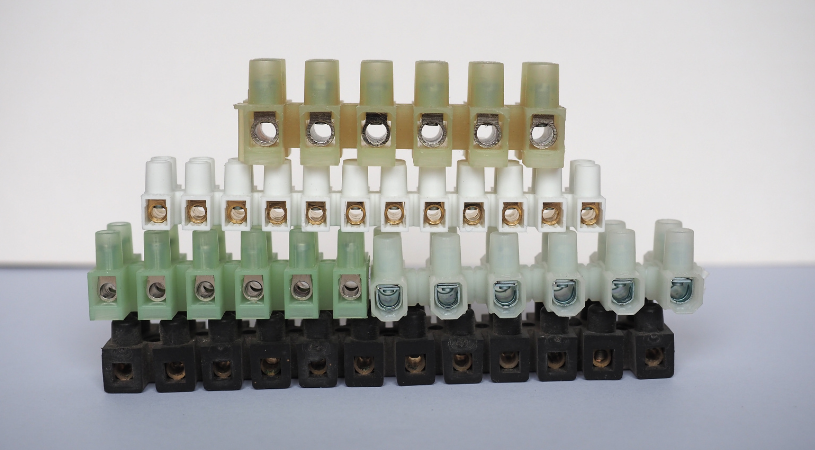
Electrical Components
Connectors, insulators, and electronic device parts that need good electrical insulation and tight fits.

Medical Devices
Non-implantable devices, drug delivery systems, and surgical instruments that need sterilizable, biocompatible grades.

Consumer Products
Mechanical parts for watches, locks, and sporting goods that have to keep working for years.
Why Choose Acetal (POM) for Injection Molding
Precision, durability, and consistent performance, part after part.
Acetal’s strength, low friction, and resistance to wear and moisture make it ideal for high-precision parts that need a long service life, in automotive, industrial, and consumer products alike. Send us your part and requirements, and we’ll tell you which grade fits and what it takes to hold your tolerances.