










MATERIALS
Injection Molding Materials, Matched to Your Part
Every part starts with the right resin. Compare the thermoplastics we mold every day, see how they stack up on the properties that matter, and get straight answers from one team that stays with your project from material selection through production.
RESIN LIBRARY
Eight Production-Proven Thermoplastics
Every part starts with the right resin. Compare the thermoplastics we mold every day, see how they stack up on the properties that matter, and get straight answers from one team that stays with your project from material selection through production.
ABS
Acrylonitrile Butadiene Styrene
The workhorse for tough, good-looking parts: housings, enclosures, and consumer products.
Impact resistant
Great surface finish
Easy to mold
Nylon
Polyamide (PA)
Strength and wear resistance for gears, bearings, and under-hood components that take abuse.
Wear resistant
High strength
Heat tolerant
PC
Polycarbonate
Glass-like clarity with impact strength glass can’t touch. Lenses, guards, and electronics.
Optically clear
Highest impact
Heat to 266°F
PE
Polyethylene
Economical and nearly chemical-proof. Containers, caps, and agricultural components.
Chemical resistant
Low cost
Moisture proof
POM
Acetal / Delrin®
Precision parts that stay precise: gears, clips, and fittings with tight tolerances and low friction.
Dimensional stability
Low friction
Fatigue resistant
PP
Polypropylene
Versatile and fatigue-resistant, the living hinge material. Packaging, medical, consumer goods.
Living hinges
Chemical resistant
Low cost
TPE
Thermoplastic Elastomer
Rubber feel, plastic processing. Grips, seals, gaskets, and soft-touch overmolding.
Flexible
Overmolding
Adjustable hardness
TPU
Thermoplastic Polyurethane
Elastic yet abrasion-proof. Wheels, seals, and protective components that flex without failing.
Abrasion resistant
Elastic
Wide hardness range
Don’t See Your Resin? We Probably Run It.
The eight above are our most-requested materials, not the full list. We also mold blends, commodity resins, and filled engineering grades, and if your spec calls out something else, ask. One team reviews your requirement and gives you a straight answer within 48 hours.
Side by Side
Material Comparison at a Glance
Typical performance for unfilled, general-purpose grades. Glass-filled and specialty grades shift these numbers, and that’s exactly the conversation our engineers are here for.
| Material | Impact Strength | Heat Resistance | Chemical Resistance | Rigidity | Flexibility | Relative Cost |
|---|---|---|---|---|---|---|
| ABS | $$ | |||||
| Nylon (PA) | $$$ | |||||
| Polycarbonate (PC) | $$$ | |||||
| PC/ABS | $$$ | |||||
| Polyethylene (PE) | $ | |||||
| POM (Acetal) | $$$ | |||||
| Polypropylene (PP) | $ | |||||
| TPE | $$ | |||||
| TPU | $$$ |
Ratings shown are directional for general-purpose grades and pending BeraTek engineering review before publish. Delrin® is a registered trademark of DuPont. Molding a material not shown here? We likely run it — ask.
Selection Guide
Three Questions That Narrow It Down
What does the part live through?
Heat, chemicals, UV, repeated impact, or constant load. The environment eliminates more materials than any spec sheet. Under-hood heat points to nylon; chemical washdown points to PP or PE.
Rigid, flexible, or both?
Structural parts want ABS, PC, or POM. Grips and seals want TPE or TPU. Parts that need both, like a rigid housing with a soft-touch grip, are a job for overmolding.
What’s the volume and budget?
PP and PE keep per-part costs low at any volume. Engineering resins cost more per pound but can eliminate machining, assembly steps, or field failures that cost far more.
Not sure where your part lands? Send us the design. One team, one point of contact, from material selection and design for manufacturability through production, with no minimum order quantities.
In the Shop
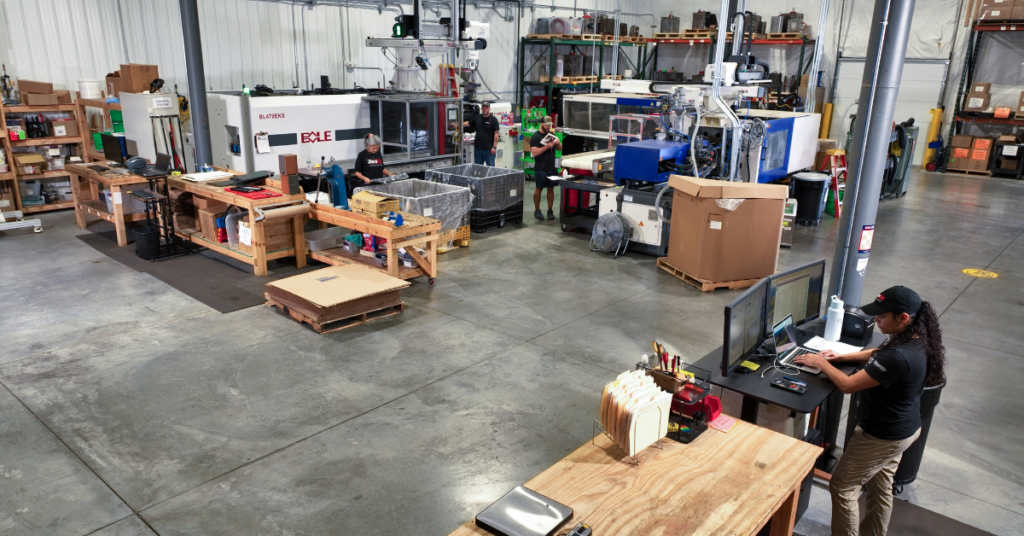
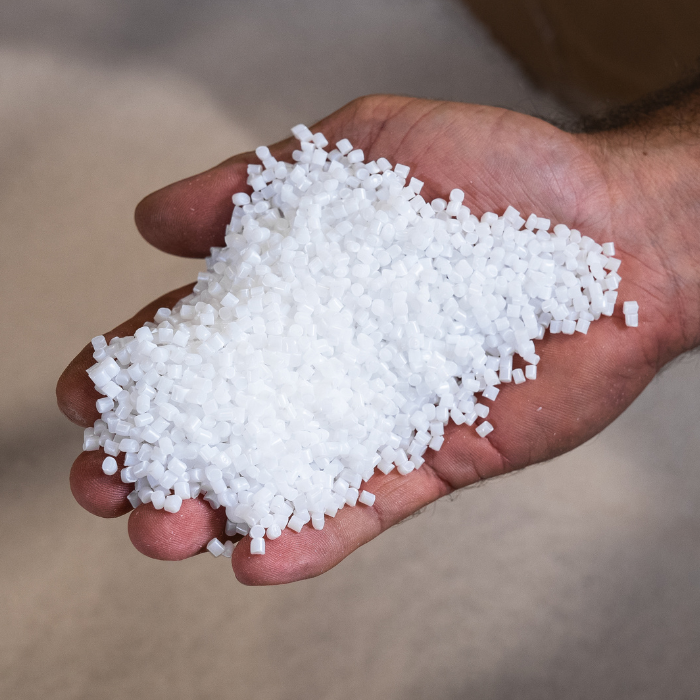
Materials in Production
FAQ
Common Material Questions
Can you help us choose the right material?
Yes, and it’s where most projects with us start. Share your part design, the environment it operates in, and your target volume, and our engineering team will recommend a resin and grade, flag any design-for-manufacturability adjustments, and back it up with the reasoning.
Do you run small quantities or prototype batches?
We do. BeraTek has no minimum order quantities, so you can validate a material with a short run before committing to full production, using the same team from first article through scale-up.
How fast can we get a quote?
Within 48 hours. Send your CAD files and requirements through the quote form and you’ll hear back from the engineer reviewing your project, not a ticket queue.
Can you match a material we’re already using?
Usually, yes. If you have an existing part or a spec calling out a specific trade-name resin, we can source the same grade or recommend an equivalent, and we’ll tell you plainly if a switch would save you money without costing performance.