



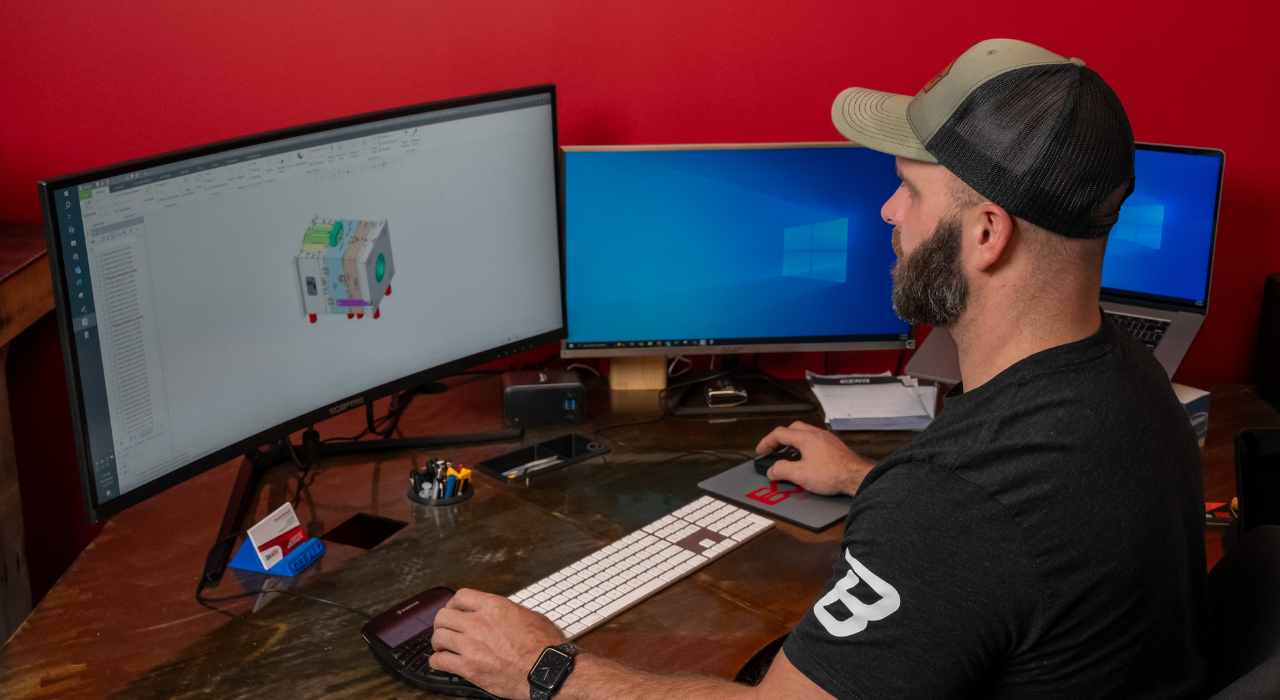







When Phytotronics set out to develop a next-generation controlled environment growing system, they needed more than just a molder. They needed a manufacturing partner who could help refine the design, reduce risk, and bring the product to market efficiently.
BeraTek Industries worked alongside Phytotronics to turn a complex concept into a scalable, production-ready solution.
The Challenge
Phytotronics’ product required:
- Tight dimensional tolerances
- Structural integrity across large molded components
- Consistent cosmetic quality
- Material performance suitable for controlled environment agriculture
- A design optimized for long-term manufacturability
Like many innovative products, the initial design needed refinement to ensure it could be produced cost-effectively at scale without compromising performance.
The Approach
1. Design for Manufacturability (DFM)
BeraTek’s engineering team reviewed the part geometry and recommended improvements to:
- Wall stock thickness for even cooling and reduced sink
- Rib structure for added strength without excess material
- Draft angles to ensure clean ejection
- Gate placement to optimize flow and reduce cosmetic defects
Early collaboration helped avoid costly mold modifications later.
2. Material Selection Guide
Because the application involved controlled growing environments, the selected resin had to offer:
- Moisture resistance
- Dimensional stability
- Strength under load
- Long-term durability
BeraTek helped evaluate resin options based on both performance and availability, balancing cost with reliability.
3. Tooling Strategy
The tooling plan focused on:
- Longevity for repeat production runs
- Efficient cycle times
- Minimal maintenance downtime
- Scalability for future demand
The result was a mold built not just for the first production run, but for sustained growth.
The Results
Through collaborative engineering and manufacturing alignment, Phytotronics achieved:
- Reduced production risk
- Optimized part geometry
- Improved part consistency
- Streamlined path to full production
- Lower long-term manufacturing costs
The final product met both structural and aesthetic standards while supporting reliable repeat manufacturing.
Why This Project Matters
This case highlights what happens when engineering and manufacturing are aligned early in the process. Instead of reacting to production problems, the team prevented them.
For companies developing innovative equipment in agriculture, environmental control, or industrial systems, early DFM involvement can be the difference between delays and a smooth launch.